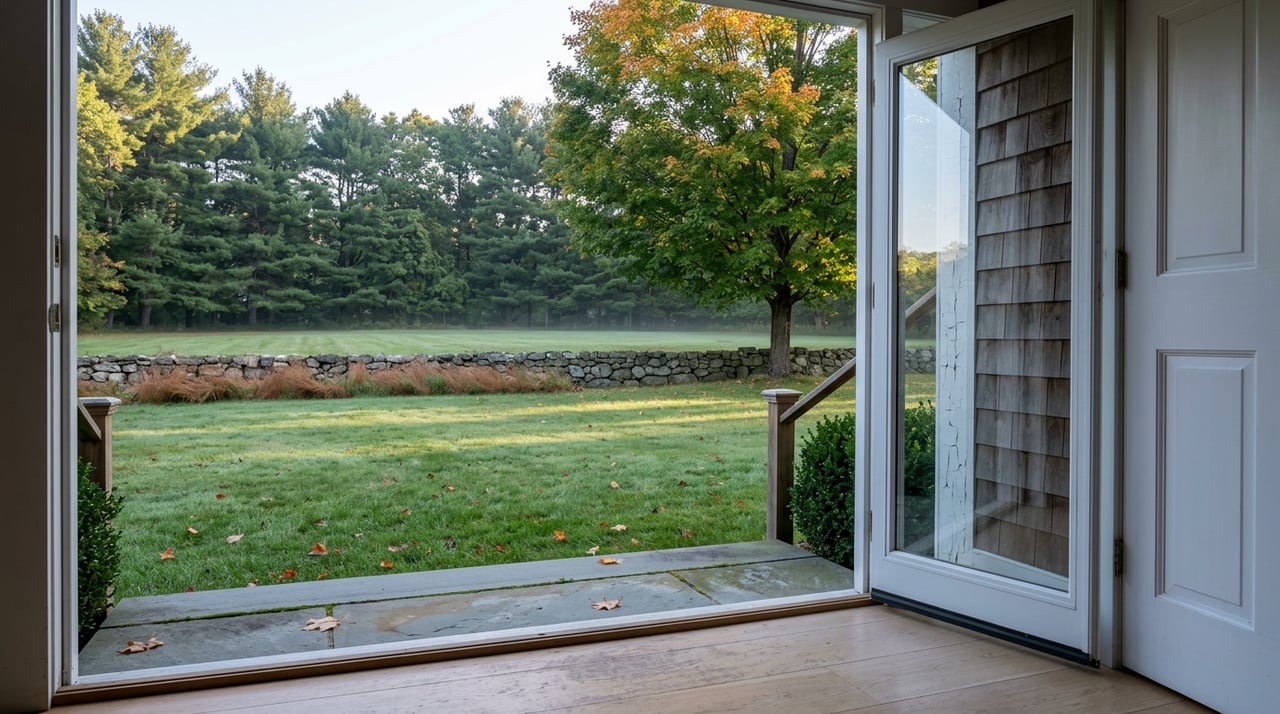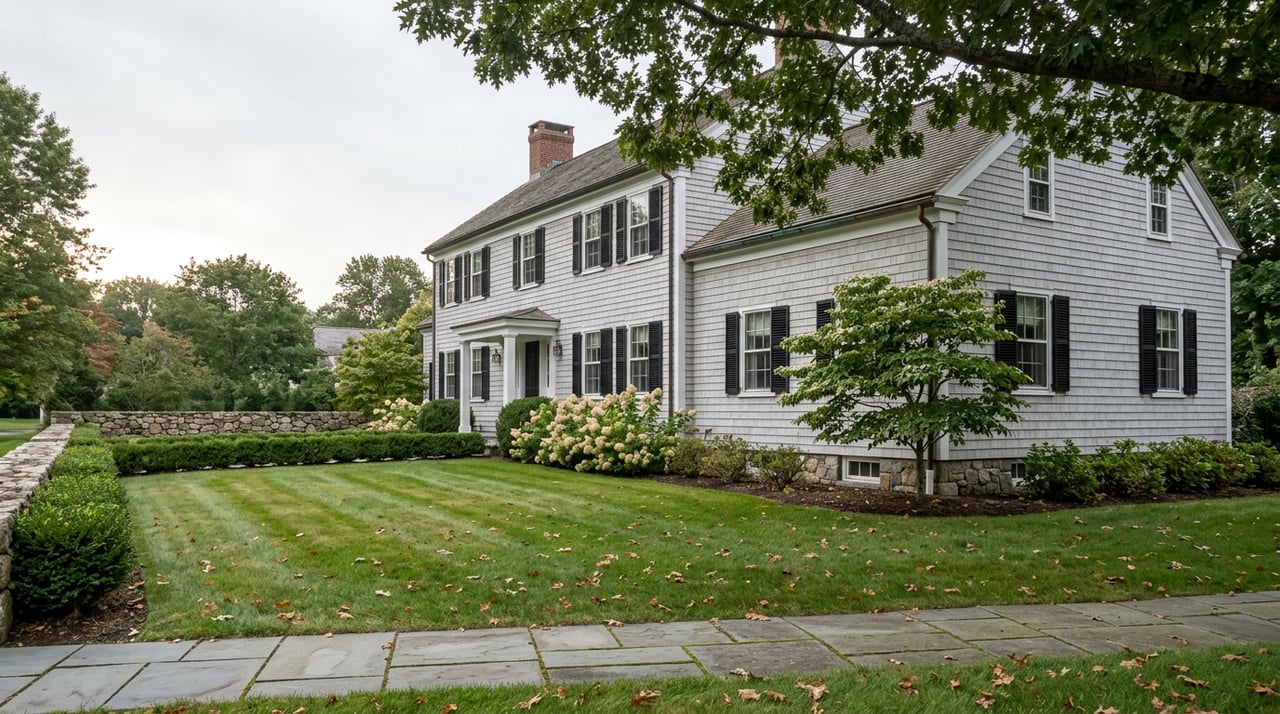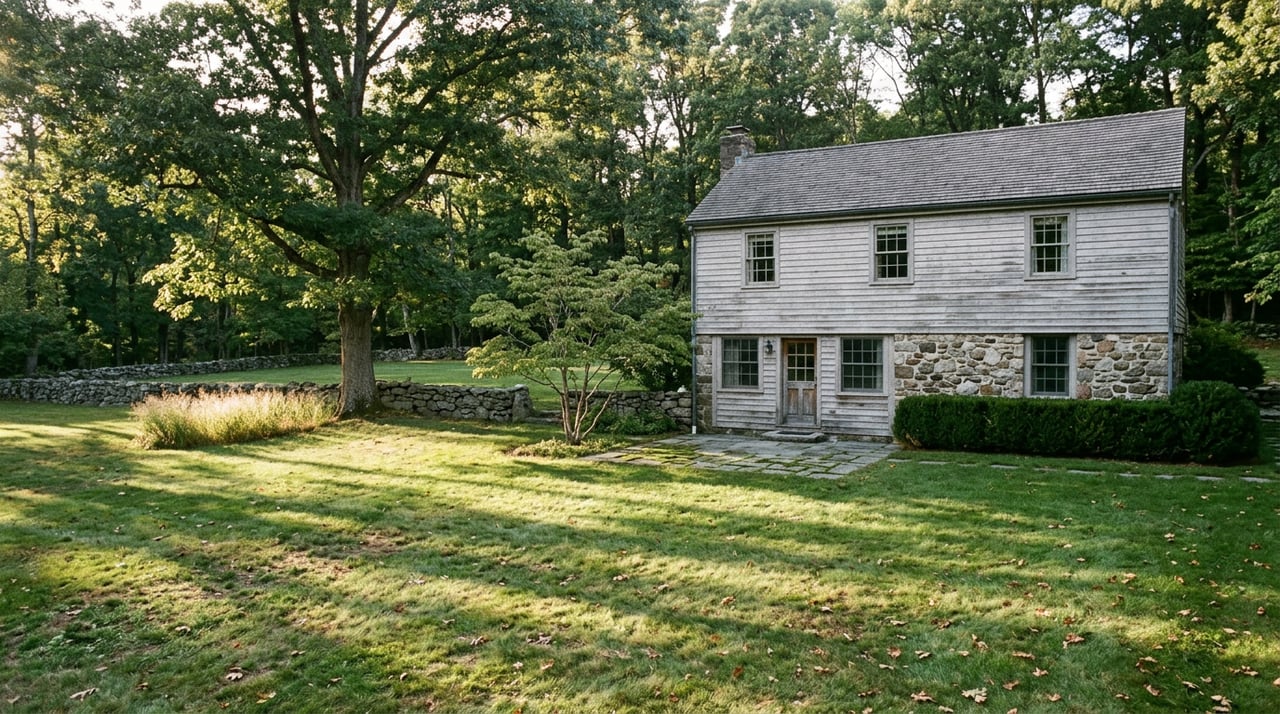
Ask anyone touring homes in Easton why the lots run two, three, sometimes eight acres, and you'll usually get the same answer: it's all protected watershed. The town looks the part. Stone walls disappear into tree lines, roads narrow into single lanes, and every so often you catch a glimpse of blue water through the pines that turns out to be one of the reservoirs feeding the region's water supply.
The story is tidy. It's also not quite right, and the correction matters if you're comparing Easton to a town like Trumbull or Monroe and trying to figure out why the math on land here works so differently.
What the town actually looks like on a map
Easton is not, in its entirety, watershed land. The Easton Courier laid out the history clearly in a piece last October: the Bridgeport Hydraulic Company, the predecessor to today's Aquarion, used eminent domain in the early twentieth century to acquire the specific parcels that feed its reservoir system, including the land around the Saugatuck Reservoir. Those parcels are owned by the water company. They are not the same thing as the town's zoning, and they are not what's keeping your neighbor's lot at three acres instead of one.
The land the water company didn't take stayed in private hands, and it was Easton's own zoning commission, not Aquarion, that decided what could be built on it. When the town adopted its original zoning in 1941, it split into two zones. Zone RA covered the southern part of town with smaller lots. Zone RB, largely in the upstream area feeding the reservoirs, required larger parcels. The Courier's reporting is direct about why: Easton's soil is rocky, and drilling individual wells and installing individual septic systems safely, without one household's system fouling the groundwater for the next, took more land per house than a town with municipal water and sewer would ever need.
That's the piece worth sitting with if you're pricing Easton against its neighbors. The large lots aren't a regulatory buffer around a shared resource that could theoretically shrink if the rules changed. They're a function of what the ground itself can support. You can rezone a watershed protection overlay. You cannot rezone rock.
Why this changes the way you should read a listing
If you've been touring Fairfield or Trumbull, where public water and sewer let builders subdivide down to much smaller footprints, Easton listings can look like a different sport. A quiet cul-de-sac lot here, at 1.6 acres according to one recent listing description, might sit on the smaller end for Easton and still be double or triple what a comparable house would occupy fifteen minutes south. That's not because Easton has more zoning to protect. It's because every lot has to carry its own well, its own septic system, and enough separation between the two, and between neighbors' systems, to keep the water clean without a treatment plant doing the work.
The town's 2018 Plan of Conservation and Development is candid about this too. It describes Easton's guiding policy as protecting environmental quality, especially the water supply watersheds, while keeping new development consistent with the town's low-density character. That's a planning goal, not a claim that every acre in town sits inside protected land. The plan also notes the town intends to keep steep slopes above 25 percent grade largely undeveloped, another physical constraint layered on top of the soil issue.
For a buyer, the practical upshot is that land here is genuinely scarce in a way that isn't likely to loosen. A neighborhood with municipal utilities can, in theory, see zoning change and density increase. Easton's supply of buildable land is capped by geology first and zoning second. When you're comparing price per acre across towns, that's the variable doing more work than the number on the tax card.
The two things that actually catch buyers off guard
None of this shows up as a line item on a listing sheet, which is exactly why it's worth knowing before you write an offer rather than after your inspection period starts.
Private roads are common, and Connecticut law puts the cost on the properties that use them. A lot of Easton's cul-de-sacs and rural lanes are private, maintained by the property owners along them rather than by the town. Connecticut passed a law in 2014 that fills the gap when there's no existing agreement: if more than one property benefits from a private easement or right of way, the owners share the cost of maintaining, repairing, and restoring it in proportion to the benefit each property receives, unless a written agreement says otherwise. If you're buying on a private road, ask for that agreement before closing. If one doesn't exist, ask what the road actually costs to plow and repave, and who's been paying for it.
Well and septic aren't a formality here, they're the whole system. Standard Connecticut purchase agreements include a well and septic rider that gives buyers the right to test both before the contingency deadline, and it's worth using it fully in a town like Easton where every house depends on its own system rather than a shared utility. The rider spells out what happens if the septic system fails inspection, including a window to negotiate repairs or walk away, and it addresses details like riser depth and where responsibility falls for pumping and retesting. Records for a specific Easton property, including septic and well permit history, are held by the Aspetuck Health District, which processes file search requests directly rather than through the town.
Neither of these is a reason to hesitate on an Easton purchase. They're the actual friction points, in place of the vague "environmental review" buyers sometimes expect. Knowing which one applies to a specific property, and getting ahead of it during your contingency period, is a much better use of time than worrying about watershed rules that were never really about your lot in the first place.
A quick way to check before you tour
If you're narrowing a list of Easton properties, two things are worth confirming before you fall for a listing photo. First, ask your agent or the listing agent whether the road is town maintained or private, since that determines whether the 2014 cost sharing law is relevant to you. Second, ask when the well and septic system were last tested and whether records are on file with the Aspetuck Health District. Both are quick questions that tell you more about a property's real carrying costs than the acreage figure at the top of the listing.
Frequently Asked Questions
Is all of Easton actually protected watershed land? No. The reservoir parcels themselves are owned by Aquarion, the successor to the Bridgeport Hydraulic Company, which acquired them decades ago. The town's large residential lots are a separate outcome of 1941 zoning decisions driven mainly by the need for adequate space around individual wells and septic systems on rocky soil.
If I buy on a private road in Easton, am I responsible for maintaining it? Likely yes, in proportion to how much your property benefits from that road, under Connecticut's 2014 law covering private easements and rights of way. If the properties along the road already have a written maintenance agreement, that agreement controls. If not, ask for the road's maintenance history before you close.
Where can I find septic and well records for a specific Easton property? The Aspetuck Health District holds septic and well permit files for Easton. You can request copies directly from them, and it's a smart step to take during your inspection contingency rather than waiting until after closing.
If you're comparing Easton against other Fairfield County towns and want a clearer picture of what a specific lot actually gives you, from road status to system age, that's exactly the kind of digging Mary Beth Grasso and the Grasso Team do for buyers every day. Reach out through our buyer resources page or browse current Easton listings to start with the questions that actually matter for this town.