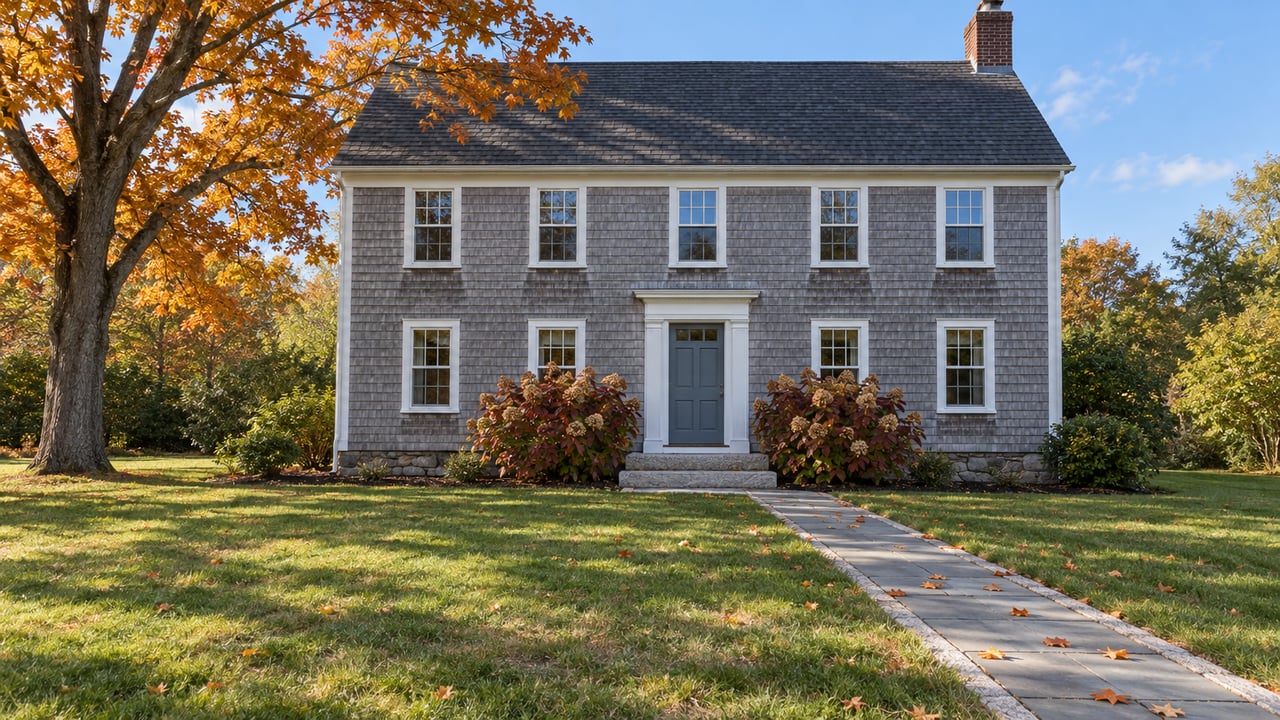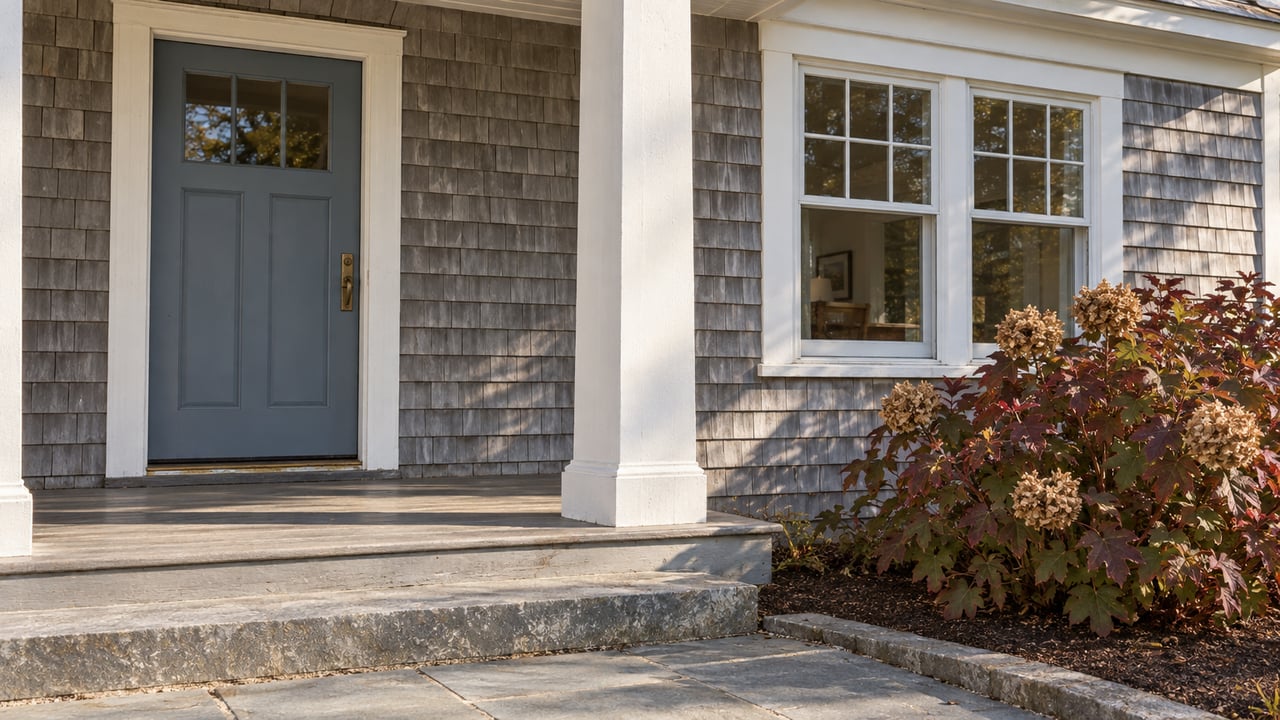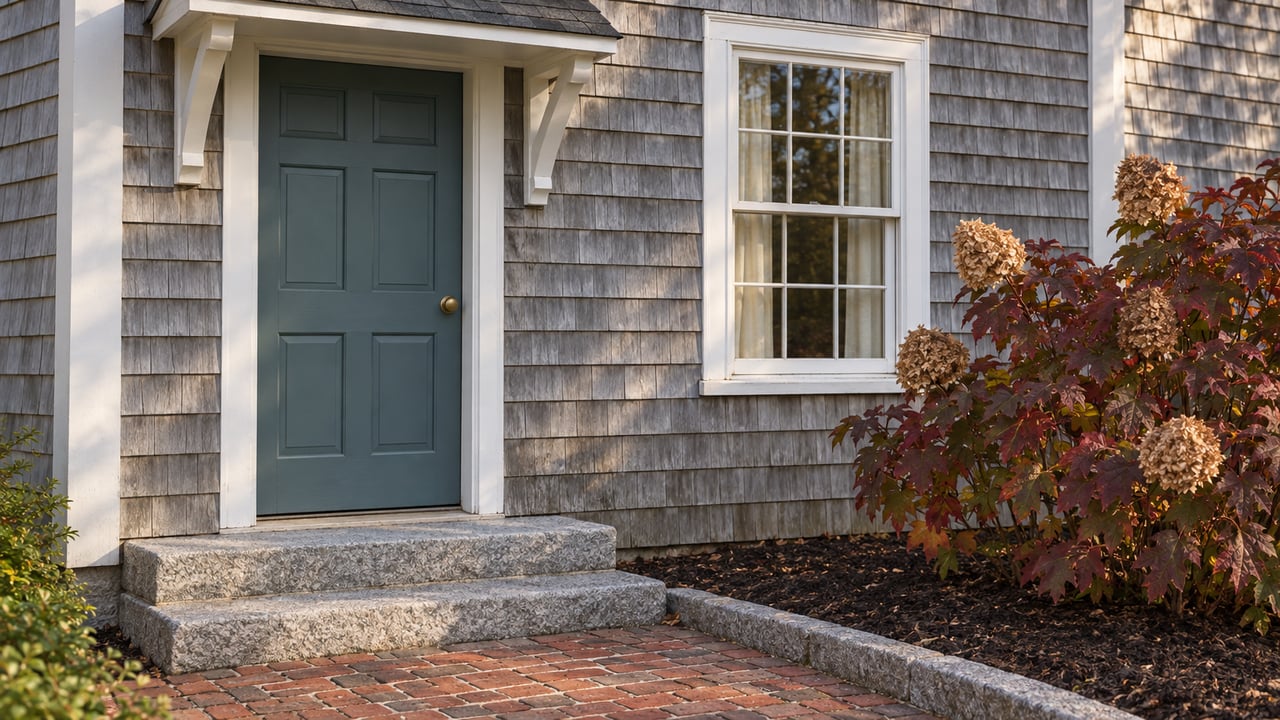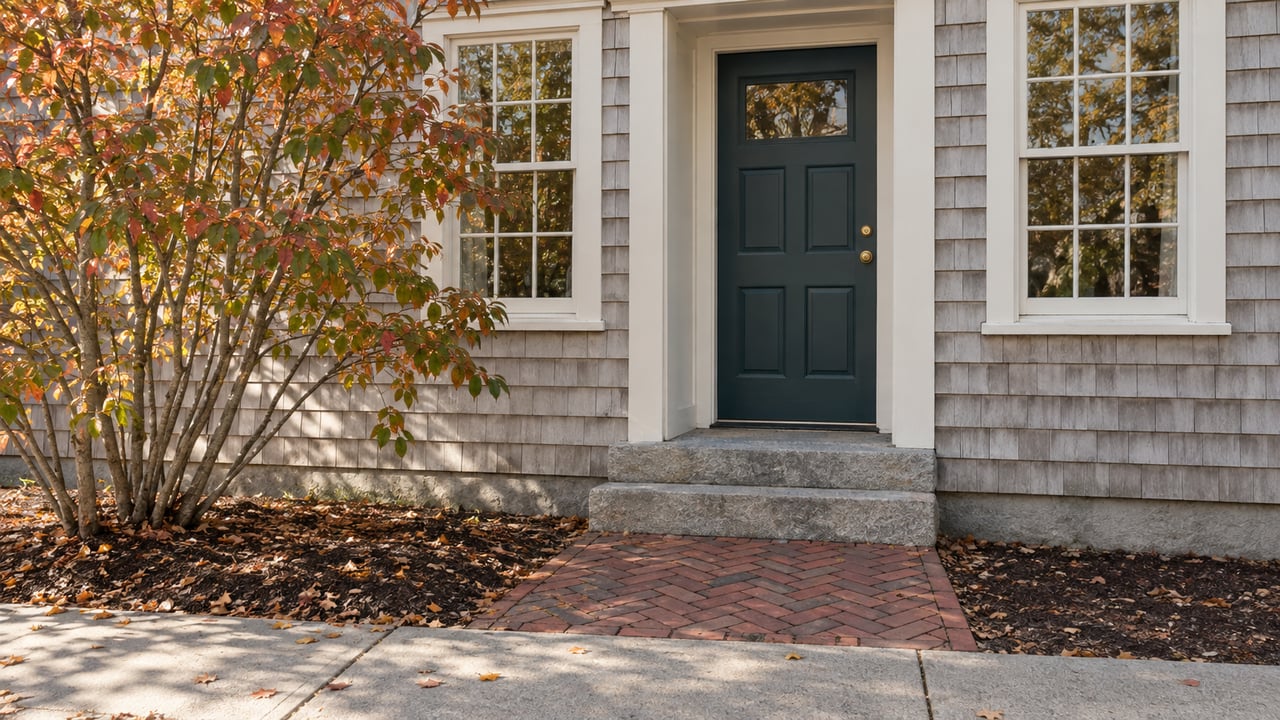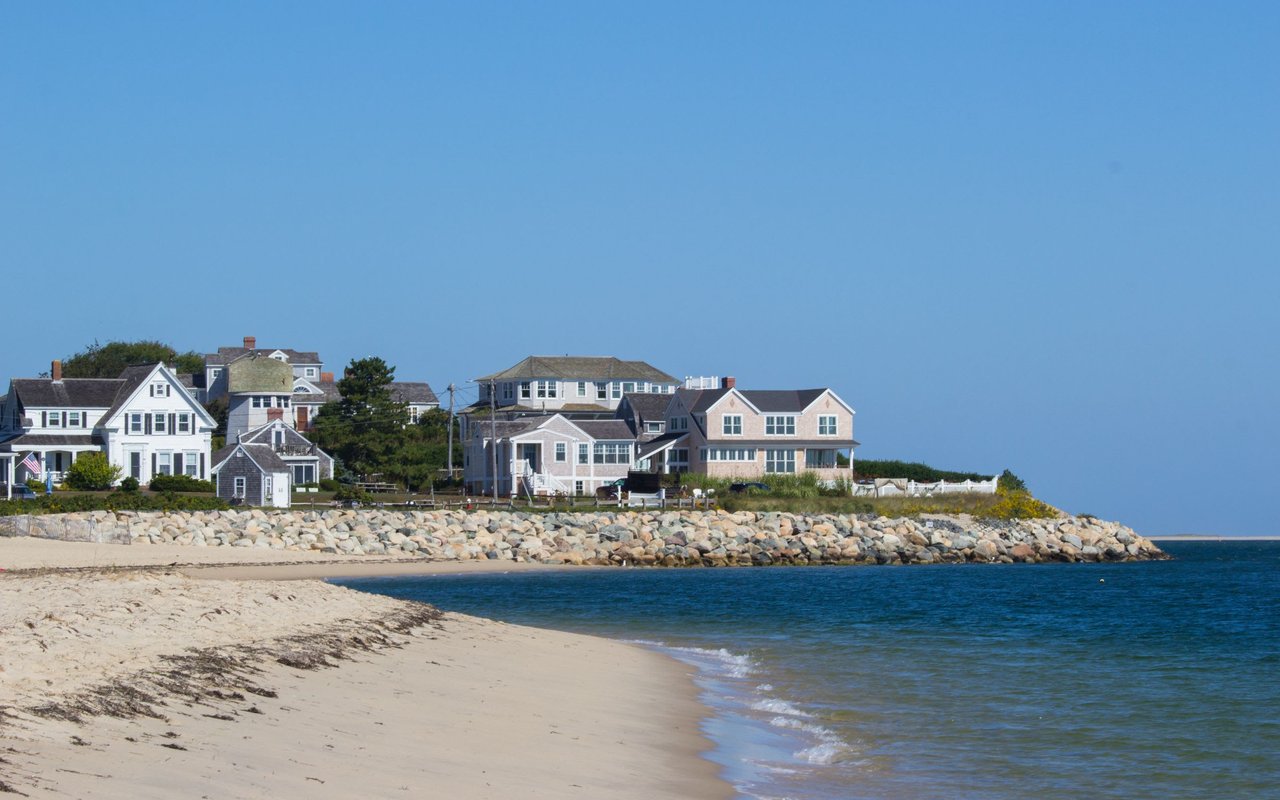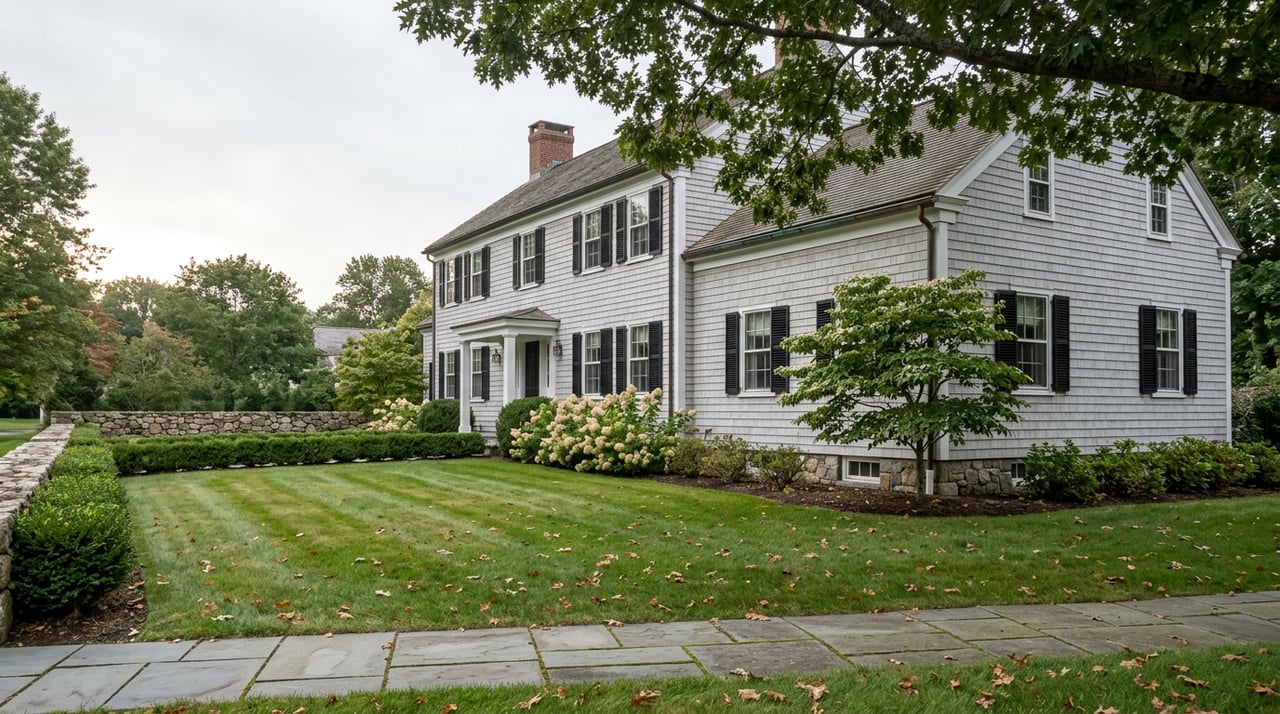
Say you close on a house on Pequot Avenue this fall. The listing photos showed a gravel driveway that needs work, a sagging fence line, and a patio that could use new bluestone. You call a landscaper, get a quote, and figure you'll have it done before the holidays.
Then you find out the driveway needs approval first. So does the fence. So does the patio.
This isn't hypothetical. A Southport homeowner filed exactly this kind of application with the Town of Fairfield in late 2023: replacing bluestone around a pool and off the garage, adding a fieldstone sitting wall and retaining wall, replacing an existing fence, and altering a driveway based on a design from Oliver Nursery's Will Hibbs. Every piece of that project, none of which touches the house itself, went in front of Fairfield's Historic District Commission for a Certificate of Appropriateness before any contractor could start, as required by Connecticut General Statutes § 7-147d.
The historic review process is one practical consideration for buyers comparing Southport with the rest of Fairfield.
What Actually Needs Sign-Off
Southport is one of three historic districts inside the Town of Fairfield, alongside Greenfield Hill and the Old Post Road area downtown. All three fall under the same Historic District Commission, which meets virtually on the second Thursday of each month. The commission's job is to review certain exterior changes visible from a public street
The commission's authority is narrower than most buyers assume, and also wider. According to the Connecticut General Assembly's Office of Legislative Research, the commission can weigh in on window and door style, exterior lighting, signage, and building materials. It cannot dictate the color you paint your house, and it has no say over how you arrange the inside. So the interior renovation you're planning is entirely yours. The exterior color palette is yours too. Everything else that's visible from the street, including fences, driveways, and hardscaping, is not automatically yours to change.
A second real filing from Willow Street shows the other side of this: a full renovation application submitted through an architecture firm, going through the same review before ground could be broken. Big project or small, house or driveway, the process is the same door.
The Math That Made This Interesting
Here's the number that should reframe how you think about Southport if you're comparing it to the rest of Fairfield on a spreadsheet. Town-wide, Fairfield's home prices rose about 18.5% in 2025, itself a strong year by any normal measure. Within that same town, in that same year, Southport specifically rose closer to 40%.
| 2025 home value growth | |
|---|---|
| Fairfield, town-wide | ~18.5% |
| Southport | ~40% |
That's not a rounding difference. That's two different markets wearing the same zip code.
By the spring of 2026, Southport's average home value had settled above $1.5 million, still climbing at a slower but still-real pace year over year. Fairfield overall, even after its own strong run, sits well below that. The gap didn't close. If anything, the 2025 surge locked in a new baseline that the rest of the town hasn't caught up to.
So what explains a single neighborhood inside an already-hot town pulling that far ahead? The honest answer isn't schools or beach access. Southport shares both with the rest of Fairfield. The honest answer is supply, and supply in Southport works differently than it does almost anywhere else in town.
Historic Review and Housing Supply
The Southport Historic District covers 225 acres and contains more than 150 buildings the National Register considers contributing structures, meaning they carry historic weight that the commission is specifically charged with protecting. The district was locally designated in 1967 and added to the National Register in 1971. Only one home inside it predates 1779, because the British burned most of Southport's structures that year during the Revolutionary War, and everything else standing today was rebuilt after.
That history isn't decoration. It's the reason the housing stock inside the district functions almost like a fixed quantity. A teardown-and-rebuild, the move that adds supply in most Fairfield County neighborhoods when demand rises, runs straight into a demolition review most owners don't attempt. New construction inside the district has to answer to the same commission that reviews a fence. The number of houses that can exist in Southport in any given year is, for practical purposes, the number that already exist.
Compare that to the rest of Fairfield, where a dated ranch can come down and a larger home can go up within a normal permitting timeline. Southport's historic-district rules limit this kind of redevelopment. When demand for a specific kind of Fairfield County living, walkable, near the water, inside a real historic streetscape, keeps growing and the supply of homes that can deliver it remains limited, this can contribute to a wider price gap between that neighborhood and its surroundings. The 2025 price comparison is consistent with this supply-side explanation.
Planning Around the Review Timeline
If you're buying in Southport and you're the kind of person who plans a renovation around a closing date, build in the commission's calendar. Meetings happen once a month. If your application isn't complete by the filing deadline for that cycle, per the town's own historic district handbook, it doesn't get considered until the next one. Miss a meeting by a day and the wait isn't a day. It's a month, sometimes more if the commission asks for revisions.
This catches people off guard because most municipal approvals in Fairfield County move faster than that. A standard building permit doesn't wait for a monthly hearing. A Certificate of Appropriateness does, and everything downstream of it, the building permit, the demolition permit, the actual start date with your contractor, waits too.
None of this means Southport renovations don't happen. They happen constantly, as both of the real applications above show. It means the timeline looks different than it would for the same project three towns over, and a buyer who prices in six weeks for permitting should probably price in ten.
What This Means If You're Comparing Neighborhoods
Southport's limited housing supply may be one factor in its premium, though the price data alone doesn't establish how much the historic review process contributes. As long as the commission continues doing what it was set up to do in 1967, the supply of homes inside that boundary remains constrained, and rising demand for that particular kind of Fairfield County living can put upward pressure on prices. That may make the premium more durable than one tied to a trendy restaurant block or a school rezoning rumor. A regulatory structure that's been upheld through Connecticut's courts for decades is unlikely to change quickly.
If you're weighing Southport against other parts of Fairfield or Southport itself against a town like Stratford or Trumbull, that's the real trade you're making. You're not just buying square footage. You're also weighing how the historic review process may affect renovation options, and whether that fits the premium over a neighborhood where the housing stock can still grow to meet demand.
Frequently Asked Questions
Does living in Southport's historic district mean I can never renovate? No. Both hardscape projects and full architectural renovations get approved regularly. The requirement is that certain exterior changes visible from the street go through the Historic District Commission first.
What can I change without commission approval? Interior layout and paint color are both outside the commission's authority. Certain exterior changes visible from a public street—including fences, driveways, windows, and additions—may require a Certificate of Appropriateness; paint color is outside the commission's authority.
Is all of Southport inside the historic district? No. The district has specific boundaries, running roughly from the Metro-North tracks on the north to the Mill River and Southport Harbor on the south, with Old South Road and Rose Hill Road marking the west and east edges. Homes outside those lines follow standard Fairfield permitting.
Whether Southport's premium fits your budget and your renovation plans, or whether a neighboring Fairfield County town gets you more house for the same number, is exactly the kind of question worth working through before you write an offer. Mary Beth Grasso and the Grasso Team have walked buyers through this comparison across Fairfield, Stratford, Monroe, and the rest of the county for years. If you want a straight answer on what your number actually buys in Southport versus elsewhere, reach out and let's look at it together.
This article is general information, not legal, tax or financial advice. Consult a qualified professional about your situation.